CURRICULUM VITAE – 2018

MOHSEN NOURAZAR

Postdoc Researcher at IMEC/UGent
Ph.D. in Electronics Engineering
Software & Hardware Engineer

Mohsen Nourazar was born in Zanjan, Iran, 15 May 1986.

He obtained his diploma in mathematics and physics from NODET high school (National Organization for Development of Exceptional Talents). Afterwards, He received his B.Sc. degree in Telecommunications Engineering and his M.Sc. in Electronics Engineering in 2009 and 2011, respectively, from electrical and computer engineering department, University of Zanjan, Iran.

His M.Sc. project was about implementing an FPGA-based system for weak signal detection using Duffing oscillators, and as a result of his great performance in his M.Sc., he was qualified as an exceptional talent and was accepted for the Ph.D. program without the entrance exam.

He has recently finished his Ph.D. program in electronics engineering at the University of Zanjan (February 2018). In his Ph.D. program, which had been focused on memristor-based architectures, an approximate hardware accelerator was developed and tightly integrated with the pipeline of a generic x86 processor to speed-up different applications such as Digital Signal Processing and Convolutional Neural Networks.

Currently, he is the lecturer of several undergraduate courses such as digital design, computer architecture, and C++ programming courses.

In addition, he is a senior engineer with more than ten years of experience in both software and hardware designing at different companies.

In software designing, He has several successful Windows/Linux driver and application developments and in hardware designing, he has a great experience in designing processor-based systems, FPGA-based systems (using Verilog-VHDL), and especially, SoC FPGA-based systems which integrate both FPGA and ARM processor.

Furthermore, he has a strong knowledge of parallel programming of heterogeneous systems including GPUs and FPGAs using OpenCL and CUDA.

Computer architectures and FPGA-based systems have always been his favorite research topics. Therefore, by emerging new computational architectures, his enthusiasm and experience have increasingly been centered on combination of these two fields by using FPGA-based architectures as a hardware accelerator to empower processors in different application domains such Deep Neural Networks and Digital Signal Processing. Currently, he is the advisor for a master’s student who works on using FPGA-based architectures as a hardware accelerator to speed-up radar signal processing.

He was a B.Sc. student when he joined SadraFan company as a hardware and software designer and until now … (under construction).
EDUCATION

Postdoc Researcher
IMEC/UGent, May 2019-Present.
Supervisor: Professor Bart Goossens

Ph.D. in Electronics Engineering
University of Zanjan, February 2018.
Super Advisor: Dr. Vahid Rashtchi
Advisor: Dr. Ali Azarpeyvand, Dr. Farshad Merrikh Bayat
Dissertation title: “Code acceleration using memristor based analog computations.”

M.S. in Electronics Engineering,
University of Zanjan, 2011.
Super Advisor: Dr. Vahid Rashtchi
Dissertation title: “FPGA implementation of duffing oscillator array for week signal detection.”

B.S. in Telecommunications Engineering
University of Zanjan, 2008.
Super Advisor: Dr. Vahid Rashtchi
Dissertation title: “Developing a minimum board using ARM microcontrollers.”

Diploma in Mathematics & Physics
National Organization for Development of Exceptional Talents, 2004.

Awards & Honors

  • First class honors in Electronic Engineering Faculty of University of Zanjan for postgraduate studies, 2012.
  • Granted credit for straight admittance to the Ph.D. program of University of Zanjan, 2012.
  • Granted support from Iran’s National Elites Foundation, 2016.

RESEARCH EXPERIENCE

Interests

  • Computer Architecture, FPGA-based Architectures, Heterogeneous Computing Systems, Memristive Systems, Hardware Accelerators, Machine Learning, Deep Neural Networks, Embedded Systems

Publications

  1. M. Nourazar, V. Rashtchi, A. Azarpeyvand, and F. Merrikh-Bayat, “Code Acceleration Using Memristor-Based Approximate Matrix Multiplier: Application to Convolutional Neural Networks”, IEEE Transactions on VLSI Systems, 26, 12 (2018), 2684-2695.
  2. M. Nourazar, V. Rashtchi, A. Azarpeyvand, and F. Merrikh-Bayat, “Towards Memristor-based Approximate Accelerator: Application to Complex-Valued FIR Filter Bank”, Analog Integrated Circuits and Signal Processing, Vol. 96, No. 3, pp. 577-588, Sep 2018.
  3. M. Nourazar, V. Rashtchi, A. Azarpeyvand, and F. Merrikh-Bayat, “Memristor-based approximate matrix multiplier”, Analog Integrated Circuits and Signal Processing, Vol. 93, No. 2, 363-373, 2017.
  4. V. Rashtchi, M. Nourazar, “FPGA Implementation of a Real-Time Weak Signal Detector Using a Duffing Oscillator”, Circuits Systems and Signal Processing, Vol. 34, No. 10, 2015.
  5. V. Rashtchi, M. Nourazar, “A Multiprocessor Nios II Implementation of Duffing Oscillator Array for Weak Signal Detection”, Journal of Circuits, Systems and Computers, Vol. 23, No. 04, 2014.
  6. V. Rashtchi, M. Nourazar, “Detecting the State of the Duffing Oscillator by Phase Space Trajectory Autocorrelation”, International Journal of Bifurcation and Chaos Vol. 23 Issue 4 (2013) PP. 1-12, 2013.
  7. V. Rashtchi, M. Nourazar, R. Aghmashe, “Fault Diagnosis of Broken Bars in Squirrel-Cage Induction Motors Using Duffing Oscillators”, International Review of Electrical Engineering-IREE Vol. 7 Issue 3 (2012) PP. 4468-4457, 2012.
  8. V. Rashtchi, M. Nourazar, A Study on Duffing Oscillator’s Ability on Detecting Disappearance of the Detected Weak Signal”, International Review of Modelling and Simulations-IREMOS Vol. 4 Issue 6 (2011) PP. 3395-3401, 2011.

WORK & TEACHING EXPERIENCE

Postdoc Researcher, IMEC/UGent (2019 – Present)

Software and Hardware Developer, SadraFan Company (2007 – 2019)

Lecturer in University of Zanjan (2012 – 2018)

  • C/C++ Programming Course

    Fall 2012, Spring 2013, Fall 2013, Spring 2014, Fall 2016, Fall 2017

  • Digital Design Course

    Fall 2013

  • Microcontrollers Course

    Spring 2017, Fall 2017, Spring 2018

  • Computer Architecture (Lab.)

    Spring 2012, Fall 2012, Spring 2013

  • Digital Design (Lab.)

    Spring 2012, Fall 2013, Spring 2013, Fall 2013

SKILLS

Key Skills

  • Software & Hardware Language Programming
  • Linux Driver Development
  • Real-time Application & Driver Development for Windows OS
  • Parallel Programming of Heterogeneous Systems (OpenCL & CUDA)
  • FPGA based System Development
  • SoC FPGA based System Design
  • Real-time PCI/PCIe and Ethernet Interface Development
  • Microcontroller based System Development
  • Motion Control
  • CAD/CAM Software Development
  • Web Design

Software Design Skills

  • Languages

    C, C++, C#, Python, XAML, Matlab

  • Technologies, Design Patterns & ...

    .Net, MFC, WPF, MVVM, Multithreading

  • Mobile Application Development

    Using Xamarin

  • Parallel Programming of Heterogeneous Systems

    OpenCL & CUDA

  • IDEs, Tools & ...

    Microsoft Visual Studio, Qt, Plugin Development for AGI Systems Tool Kit (STK)

Hardware Design Skills

  • PCB Design

    Altium Designer

  • Hardware Design Languages

    VHDL, Verilog

  • Microcontroller based System Design

    ARM microcontrollers, Real-time operating systems (FreeRTOS), USB devices (HostDevice), Ethernet devices

  • FPGA & SoC FPGA based System Design

    Hardware development for FPGA & software development for integrated ARM processor

  • Real-time PCI/PCIe & Ethernet Interface Development

    Driver and hardware development

  • FPGA based Code Acceleration

    OpenCL

  • IDEs, Tools & ...

    Altium Designer, IAR Embedded Workbench, ModelSim, Intel Quartus & Qsys, Intel FPGA SDK for OpenCL

Simulators

  • Processor simulators

    Marssx86, SimpleScaler

  • Circuit Simulators

    Hspice & Ngspice

  • AGI Systems Tool Kit (STK)

    Plugin Development for AGI Systems Tool Kit (STK)

General Software Skills

  • LaTeX, Microsoft Office, Rhinoceros, Autodesk Inventor, Adobe Illustrator, Adobe Photoshop

PROJECTS

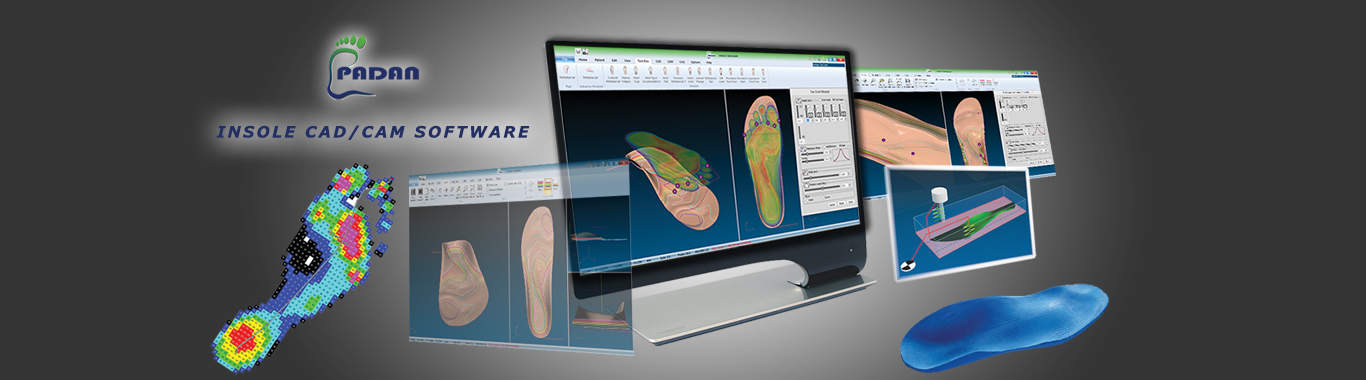
Padan – Medical insole designer

  • Description: CAD/CAM Software for Medical Insole Designing
  • Technologies: C++ & MFC, Plugin Development for Rhino3D

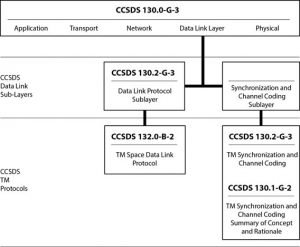
FPGA implementation of CCSDS’s Protocols

  • Description: FPGA implementation of CCSDS’s TM Space Link Protocol and TM Synchronization and Channel Coding Protocol
  • Technologies: VHDL

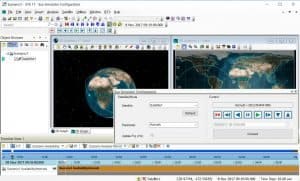
Sun simulator for satellite testbed

  • Description: Position controlled sun simulator for in-orbit satellite testbed
  • Technologies: Sun simulators, Plugin development for AGI Systems Tool Kit (STK), ARM Microcontroller, Step-motor drive & control

CNC Machine Development

  • Description: Software and hardware design for real-time PC-based 4-axis CNC controller
  • Technologies: C++, MFC, Real-time software development, PCI driver development, VHDL, PCB design, Motor drive & control, …

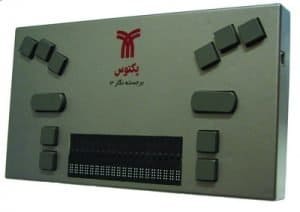
Smart Braille Display

  • Description: Developing smart braille display for blind computer users
  • Technologies: ARM Cortex-M3 Microcontroller (ATSAM3X), PCB Design, High-speed USB (OTG), Mass storage, Battery charge controller, DC-DC boost driver (Lithium battery to 5V), Bluetooth, Music player, …

ِKernel Driver Development for Embedded Linux

  • Description: Driver development for beagle bone
  • Technologies: C programming, embedded Linux, kernel driver development, beagle bone

CNC Tool path simulator

  • Description: Educational 3D tool path simulator for G-Code programmimg
  • Technologies: OpenGL, C++, MFC

FPGA based Gigabit Ethernet

  • Description: Developing gigabit ethernet as an interface between CNC controller and the PC
  • Technologies: VHDL, Verilog, Altera’s Cyclone IV FPGA,  Gigabit Ethernet (only PHY and MAC), Real-time software development

High Voltage DC-DC Boost Converter

  • Description: Lithium battery to 300V DC-DC Boost converter
  • Technologies: PCB Design, Boost converter

DC Motor PID Controller

  • Description: PID controller for a DC motor (220V, 10A)
  • Technologies: PID controller, Atmel AVR Microcontroller, PCB design

USB Security Dongle

  • Description: USB security dongle for protecting software
  • Technologies: Encryption algorithms, PCB Design, HID USB

Micro Water Turbine:

  • Description: Micro water turbine power generator for a mountain house

University Projects

Ph.D Final project: Code Acceleration using memristor based analog computing

  • Description: Demonstrates the feasibility of building a memristor-based approximate accelerator to be used in cooperation with general-purpose x86 processors
  • Technologies: Memristor, Marssx86, McPAT, Ngspice
  • Abstract: Today, improvements in human life highly depend on the computations that are being done by processors all over the world. Therefore, by improving their performance during past decades, our planet has enjoyed a historical improvement especially in the world of technology. However, some limitations have ceased the speed of these improvements. Therefore, the researchers have focused on developing new architectures for computing. One of these solutions is to build memristor-based accelerators to empower the current processors.In this work, we demonstrate the feasibility of building a memristor-based approximate accelerator to be used in cooperation with general-purpose x86 processors. First, a mixed-signal memristor-based vector-matrix multiplier is developed with the ability of handling negative and complex numbers. Then, the presented multiplier is tightly integrated with the pipeline of a generic x86 processor. To evaluate the accelerator, the cycle accurate Marssx86 full system processor simulator is coupled with the Ngspice mixed-level/mixed-signal circuit simulator which is done by extending the Marssx86 to utilize the circuit simulator as a hardware accelerator.

    To validate the accelerator, it is utilized for different applications such as matrix multiplications, FIR filter banks and convolutional deep neural network. The simulations show that the memristor-based accelerator provides speedup and energy saving for these application by tolerating inaccuracy in results. The memristor-based accelerator provides more than 100x speedup and energy saving for a 64×64 matrix-matrix multiplication, with an accuracy of 90%. Using the accelerated tiny-dnn for the MNIST database classification more than 10x speedup and energy saving along with 95.51% pattern recognition accuracy is achieved.

    Finally, current work presents an extensive study on the parameters that influence the accuracy, performance, and efficiency of the system that includes studying the effect of faulty memristors, analyzing opamps’ characteristics, studying the effect of matrix elements’ distribution and analyzing bit-accuracy of operation.

M.S. Final project: Hardware implementation of Duffing oscillator array for week signal detection

  • Technologies: VHDL, Altera Cyclone IV GX, PCI Express Interface, Nios II processor, Nios II multiprocessor
  • Abstract: In this project we presented an FPGA implementation of weak signal detector by duffing oscillator for real-time detection of weak signals in noisy environments. The proposed implementation brings together the efficiency of weak signal detection by chaotic oscillators and the advantages of hardware implementation to achieve an efficient weak signal detector. To optimize the performance and area, the VHDL is used as a hardware description language of the design. The design which consists of the duffing oscillator and a novel state detector, Phase Trajectory Autocorrelation, is implemented using one of the Altera’s Cyclone IV GX FPGAs. In this paper beside the structure and resource utilization of the design, an experimental result is also presented to show the effectiveness of the implementation.

B.S. Final project: Developing a minimum board using ARM microcontroller

  • Description: Developing an educational board using ARM microcontroller
  • Technologies: PCB design, Atmel AT91SAM7X ARM microcontroller

Course project : GPU Programming

  • Technologies: Parallel programming, CUDA

Course project : Smart Home Lighting

  • Description: Application of neural networks for controlling home lighting
  • Technologies: Neural networks, Fast Artificial Neural Network Library (FANN), Atmel ARM microcontroller

Course project : Measuring Real-Time Performance of Embedded Operating Systems

  • Description: Measuring Real-Time Performance of FreeRTOS and ThreadX Based on Thread-Metric Benchmark Suite Using an ARM Cortex-M3 Architecture
  • Technologies: ARM Cortex-M3 Architecture, Real-time operating systems

Course Project: 8 Point Radix 2 FFT

  • Description: VHDL implementation of 8 Point Radix 2 FFT
  • Technologies: VHDL, Floating point arithmetic, Cyclone II FPGA, FFT

Course Project: CIC Decimation Filter

  • Description: VHDL implementation of a CIC Decimation Filter
  • Technologies: VHDL

REFERENCES

University

  • Vahid Rashtchi, Associated Professor, University of Zanjan, Zanjan, Iran

    rashtchi@znu.ac.ir

  • Farshad Merrikh-Bayat, Associated Professor, University of Zanjan, Zanjan, Iran

    f.bayat@znu.ac.ir

  • Ali Azarpeyvand, Assistant Professor, University of Zanjan, Zanjan, Iran

    azarpeyvand@znu.ac.ir

Work

  • Mahdi Mahdipour, CEO at SadraFan Gostar Co.

    info@sadrafan.com, m_mahdipour@yahoo.com

CONTACT

Home

University

  • Department of Telecommunications and information processing, Faculty of Engineering and Architecture, Ghent University, Sint-Pietersnieuwstraat 41, 9000 Gent
  • mohsen.nourazar

Send me mail

1 + 3 = ?